Posts

Grow your own

Image
I hadn't heard the expression "food security" before visiting Home of Hope. Nothing to do with comfort-eating, by the way. It's the mindset you need when you've got 700 mouths to feed in a country where hunger stalks most families for months of the year at a time. The period before harvest, when village grain stores sit long empty - it's called the Hungry Season. So when we visit the Home's farm land, bumping along in the much loved blue farm truck, it's not the mesmerising views of misted wooded hills sprouting from the plain we're here to see - achingly beautiful though they are. At this time of year we've learned to appreciate the beauty of land made ready to plant for maize in October, and the significance of irrigated out-of season beans. Workers will plant well-spaced maize seeds, dress with carefully aimed fertiliser (there’s a serious move in the country towards soil-improvement using animal manure: we’ll get there) - then, just add wat...

Floors and ceilings.

Image
Dawn in Africa is a bit special. The Home’s guard dogs barked a lot during night. We’re told it’s the hyenas that set them off, as they head back to the hills after roaming the villages during the night. After breakfast Ruth, Phil and I sat down with the Home of Hope management to learn about their vision and objectives. Across key areas of Village (which includes the basics of food and accommodation), Schools, Vocational Training Centre and Farm, we heard from each person their vision at one, three, seven and fifteen year timeframes. It was inspiring and sobering at the same time. At the heart of the team’s vision is the desire see the best possible outcomes for the young people in their care. “In fifteen years time we want to see the leadership of our country include graduates from Home of Hope.” Over the coming weeks we’ll all work together (with the help of technology - Google Docs!) to identify Vision Owners who’ll lead the efforts to see vision become verifiable change. It’s not ...

Meet Home of Hope

Image
  Home of Hope, below Mchinji Mountains Home of Hope sits below “Mchinji Mountains” - a government Forest Reserve stretching up from Mchinji town and marking the border with Zambia. I love looking at those hills. Look down from the peaks, and you see the plain of Mchinji district stretch away, dotted with remote villages and farms blessed with water from the hills. I put the camera drone up this morning to enjoy some views from above without the sweat of the climb! Next year will mark the 25th Anniversary of Home of Hope. From just one house for the Chipetas, their ten orphaned grandchildren and ten other orphans, it’s now a huge campus - a village, actually. Houses for the “mothers” and younger children in family units, dorm blocks for older children, Nursery, Primary, Secondary and Vocational schools all on site, with accommodation for administration staff and a growing number of teachers. That’s not all. There’s an on-site clinic, which since Covid extends care to people from th...

Nsima with Beans!

Image
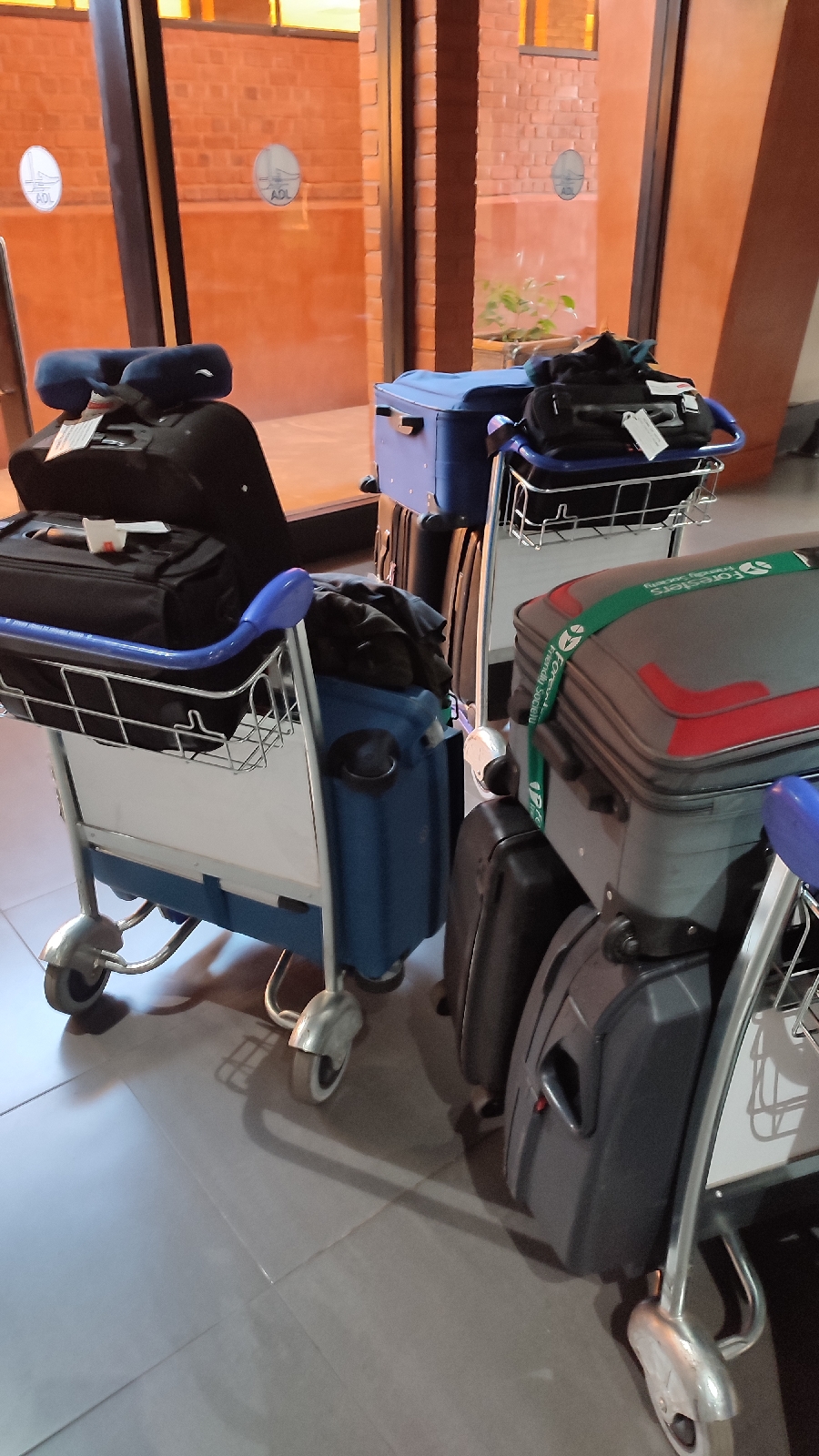
8/8 pieces of hold luggage through to Lilongwe! Happy. Lucy Chipeta, Rev Chipeta's daughter and Executive Director of Home of Hope, was there to meet us as always. Several other of the staff team met us outside the airport and set off for Mchinji with our stuff in a small truck, while Lucy took us to pick up a local SIM card and a few provisions. Then after a two hour drive, the refreshing sight of Mchinji Mountains. They tell us we're nearly Home from Home. 30 children or more have waited for us in the dark outside the Visitors' Lodge, sitting on chairs they've carried from the Main Hall. We apologise to them for being "late" (Lucy always expands in translating, and explains about the bad traffic and queues for fuel) and say we look forward to being able to actually see them in the daylight tomorrow. Rev and Mrs Chipeta, the founders of Home of Hope, came up to the Visitors Lodge to greet us and to pray brief th...

Africa helping Africa

Image
On the flight from Nairobi to Lilongwe. I'm sitting with Ahmed - an accountant for a Sierra Leone- based charity.  He and his colleagues help remote villages in Malawi build simple safe wells. (A safe well must be capped or have a substantial raised rim, to stop unclean material from polluting the water.)  His team also works with villagers to plant crops by providing the inputs (seed, fertilizer), in return for a proportion of the crop at harvest time. This share they sell in order to be able to invest in the next year's plantin - a simple pattern they then encourage and train the village leaders to do themselves. (Examples of wells built by Ahmed's team. These are in Sierra Leone. He didn't have pictures of the wells in Malawi on his phone.) I asked Ahmed why he works to help another country in Africa when his own country of Sierra Leone is very poor. "I am Muslim. In Islam, when we help others this delights God so much. And I never ask an...

We've crossed the equator

Image
Hi from Nairobi! - well, from Jomo Kenyatta International Airport, International Transfers. (Mural at the airport) Ruth, Phil and I have six hours to wait here until KQ754 takes us on down to Lilongwe. Can't wait. (Adventure Hats are a must) I enjoyed seeing the plane icon on my seat-back screen showing us south of the equator. Bedford is 52 degrees North of the equator; Mchinji, Malawi - 13 degrees south. Our journey is a tad more than one sixth of the way around the planet. Impressed with Kenya Airways so far. If all our cases get through intact, we'll consider for 2023